
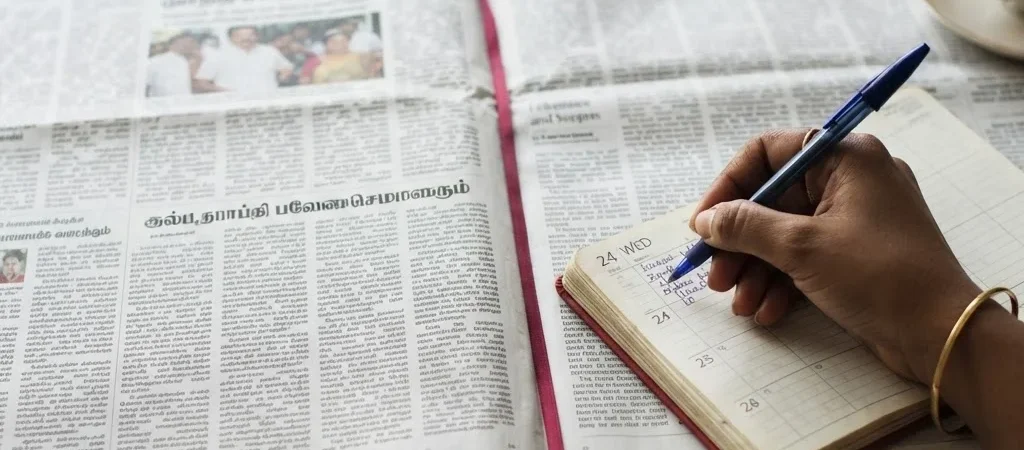
When a story is available in Tamil and English, switching between versions can help clarify a detail—or create a new question if a phrase is translated differently. The goal is not to decide that one language is automatically more reliable. It is to understand the shared facts and notice where wording needs closer attention.
Compare the details that anchor it
Begin with details that should remain stable across versions: the people and places involved, the date, the sequence of events, and any stated numbers. If one version says a proposal was introduced and another says it was approved, pause and check the article’s context. Those verbs describe different stages.
Names and technical terms can also be rendered in different ways, especially when a familiar English term has no equally familiar everyday equivalent. Read the sentence around the term rather than comparing isolated words. That surrounding context often shows whether the article means a formal institution, a general idea, or a specific action.
Use each version with purpose
Read the version that feels clearest first, then open the other when a detail matters to you. You might use the Tamil article to follow the explanation comfortably and the English version to check the exact spelling of an organization or a quoted technical phrase. If the two seem to differ on a meaningful fact, look for the source or document cited in the coverage.
Not every article will be available in every language, and translations may appear at different times. A clear publication should make language options easy to find and identify which version you are reading. Treat the second version as another route into the story—not as a substitute for checking important details.